Choosing the best China Skull Beanie manufacturer requires more than comparing prices. A reliable supplier must combine knitting experience, material knowledge, consistent quality control, and clear communication. The right partner should understand how a beanie fits around the forehead, covers the ears, and keeps its shape after repeated washing. Small details matter. A loose rib, uneven embroidery, or rough inner seam can damage an otherwise attractive product.
Daniel Mercer, a knitwear product-development specialist with experience in private-label accessories, says, “The best Skull Beanie manufacturer is not the cheapest factory; it is the one that proves consistency from sample to shipment.” This point deserves attention. A professional factory should provide fabric specifications, sample revisions, production photos, inspection records, and realistic delivery schedules. Buyers should also check knitting capacity, minimum order quantities, packaging options, and the factory’s experience with custom logos or seasonal collections.
Still, factory selection is rarely perfect. Online profiles can look impressive, while production results may differ. I have seen attractive samples hide weak stitching and inaccurate color matching. That is why a documented sample process matters. Ask for yarn details, size measurements, wash testing, and a pre-shipment inspection. Certifications can support trust, but they should be verified rather than accepted blindly.
This guide examines leading China Skull Beanie manufacturers through practical sourcing standards. It considers product quality, customization, communication, production stability, and after-sales support. The goal is not to promote one supplier without evidence. It is to help buyers compare carefully, identify risks early, and choose a manufacturing partner that can deliver reliable headwear at a reasonable cost.
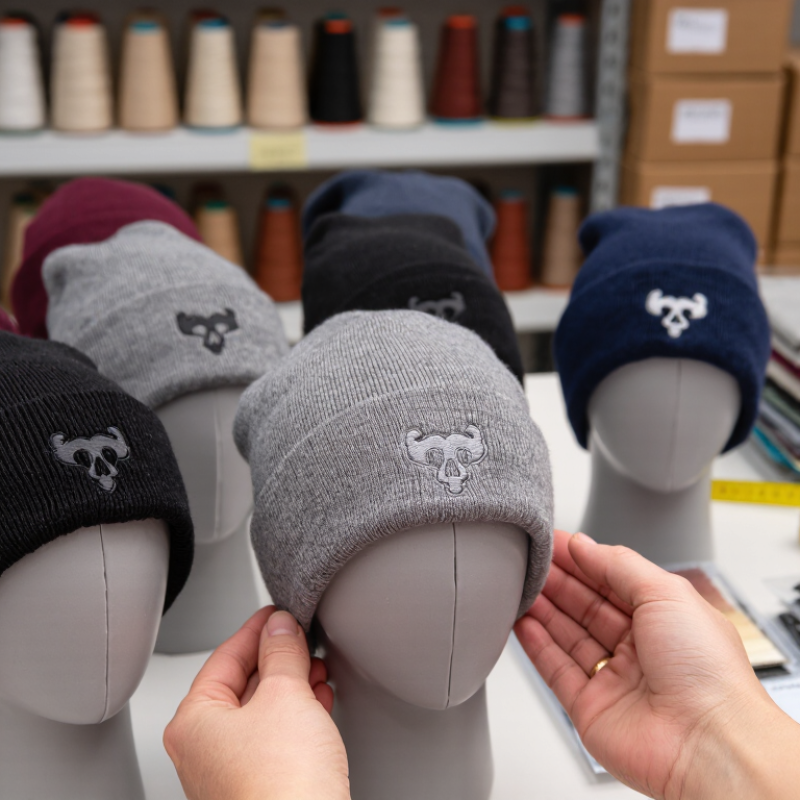
A high-quality China skull beanie manufacturer proves consistency before discussing price. Request physical samples, not only digital photos. Check rib recovery after stretching, seam strength, embroidery tension, and crown shape. A reliable factory should provide yarn composition, fabric weight, shrinkage results, and colorfastness records. These details reveal practical manufacturing experience.
Material control also matters. Textile Exchange’s 2024 Materials Market Report states that global fiber production reached 124 million tonnes in 2023. It may reach 160 million tonnes by 2030. This growth increases the need for traceable yarns and responsible sourcing. Ask whether the supplier can identify fiber origins and retain batch records. Independent laboratory testing adds credibility, especially for color migration, pilling, and restricted substances. Certificates help, but the label alone is not proof.
Tips: Order a small pilot batch first. Measure ten beanies, not one. Compare actual dimensions, weight, stretch, and stitching. Ask for the factory’s defect inspection method and acceptable quality limit. A supplier that explains problems clearly may be more dependable than one promising perfection. I would also review production photographs, audit documents, and sample revisions. Small mistakes happen. Hidden mistakes are the real warning. A strong manufacturer communicates early, corrects patterns carefully, and protects quality across repeated orders.
What Is the Best China Skull Beanie Manufacturer?
The best China skull beanie manufacturer depends on your product requirements, not on attractive photos. A useful comparison starts with physical samples. Request identical specifications from several factories. Compare yarn softness, stretch recovery, rib density, and embroidery clarity. A beanie may look excellent online but feel thin in your hands. Check the inside seams carefully. Loose threads often reveal weak quality control.
Ask each manufacturer for a detailed material sheet and production timeline. The sheet should identify fiber content, fabric weight, color standards, and size tolerance. Confirm the minimum order quantity before discussing pricing. A low unit price may hide higher sampling, packaging, or shipping costs. Request photos from cutting, knitting, stitching, inspection, and packing stages. Better factories explain these steps clearly. Vague answers deserve caution.
Communication is another practical test. Send a simple measurement chart and observe how accurately the factory responds. Can the team identify possible fitting problems? Can it suggest a safer adjustment without changing the design? These details show technical understanding. An independent quality inspection can check dimensions, color consistency, seam strength, and carton counts. Do not rely only on factory-provided images. They help, but they are not proof. My own comparison method would still improve by recording every sample result in one table. Small omissions can distort a final decision. A reliable manufacturer should provide consistent samples, realistic deadlines, transparent documents, and responsive production support.
Choosing the best China skull beanie manufacturer starts with materials, not catalog photos. A close-fitting beanie needs warmth, recovery, and stable shape after washing. Acrylic offers color consistency and lower cost. Merino provides softness and insulation, but needs shrinkage control. Recycled polyester supports moisture management and traceability. Textile Exchange’s Materials Market Report 2024 estimates global fiber production reached 124 million tonnes in 2023. Polyester represented about 57% of that volume. This scale makes recycled-content verification important.
Request yarn composition records, certification documents, and recent test results. Check pilling, colorfastness, dimensional change, and seam strength. Testing against ISO 6330 washing procedures can expose poor recovery. ISO 12945-2 helps evaluate surface pilling. Do not accept vague phrases like “premium yarn.” Ask for the fiber percentage. Ask who supplied it. A lower recycled-content claim may sometimes outperform a higher claim when yarn consistency matters.
Production capability matters equally. Look for computerized flat knitting, reliable rib construction, precise linking, embroidery control, and flexible sampling. A strong factory should explain gauge, weight, minimum order quantity, and tolerance ranges clearly. It should also show inline inspection records, not only final photographs. Sedex’s supplier-assessment framework emphasizes labor, health, environment, and business ethics risks, so factory evaluation should cover more than product quality. My checklist would not treat certification as proof of every process. Independent testing still matters. Small defects matter.
A practical comparison framework for evaluating material selection and manufacturing capability
| Material | Typical Fiber Content | Warmth | Moisture Management | Softness and Skin Comfort | Shape Retention | Common Advantages | Best Use |
|---|---|---|---|---|---|---|---|
| Acrylic | 100% acrylic or acrylic-rich blend | ★★★★☆ | Low to moderate; absorbs less water than wool but is not highly absorbent | Soft, lightweight, and generally non-irritating | Good when properly knitted and finished | Color consistency, low cost, easy care, and dependable bulk production | Everyday fashion and promotional skull beanies |
| Merino Wool | 100% wool or wool blend | ★★★★★ | Good moisture-vapor absorption and temperature regulation | Usually softer than standard wool; fiber diameter affects comfort | Good, but may require careful washing and finishing | High warmth-to-weight ratio, natural odor resistance, and premium hand feel | Cold-weather and premium outdoor collections |
| Cotton | 100% cotton or cotton blend | ★★☆☆☆ | Absorbs moisture but dries relatively slowly | Soft, breathable, and comfortable in mild conditions | Moderate; can shrink or lose shape without proper treatment | Natural hand feel, breathability, and suitability for lightweight designs | Spring, autumn, indoor, and mild-weather styles |
| Recycled Polyester | 100% recycled polyester or performance blend | ★★★☆☆ | Low moisture absorption; can support quick-drying constructions | Smooth and lightweight, depending on yarn specification | Very good resistance to stretching and abrasion | Durability, quick drying, color performance, and recycled-content options | Sports, activewear, and durable promotional programs |
| Acrylic-Wool Blend | Commonly 50/50 or other custom ratios | ★★★★☆ | Better than acrylic alone when the wool percentage is meaningful | Balances wool warmth with acrylic softness and reduced cost | Good with suitable yarn twist and finishing | Balanced performance, improved warmth, and flexible price positioning | Mid-range winter skull beanies |
| Cotton-Polyester Blend | Custom ratio according to required hand feel and durability | ★★★☆☆ | Balances cotton comfort with polyester drying performance | Comfortable with improved resistance to deformation | Better than cotton alone | Versatile performance, easier care, and reliable everyday wear | Lightweight lifestyle and workwear accessories |
| Capability or Control Point | What a Strong Manufacturer Should Provide | Why It Matters for Skull Beanies | Recommended Acceptance Criteria | Priority |
|---|---|---|---|---|
| Knitting Technology | Flat-knit, rib-knit, or circular-knit production matched to the design | Determines stretch, thickness, structure, and fit around the head | Approved sample must match the requested stitch density, dimensions, and stretch recovery | ★★★★★ |
| Gauge and Stitch Control | Ability to control yarn count, needle gauge, stitch density, and fabric weight | Prevents a skull beanie from being too thin, loose, bulky, or uncomfortable | Production tolerance should be agreed in writing for size, weight, and stitch appearance | ★★★★★ |
| Yarn Traceability | Material composition records, yarn lot identification, and color-lot management | Reduces differences in color, softness, strength, and composition between batches | Require fiber-content documentation and a retained reference sample for each production lot | ★★★★★ |
| Color and Dyeing Control | Lab dips, color approval, shade cards, and colorfastness testing | Dark colors and high-contrast patterns can show visible shade variation | Approve a lab dip before bulk production and define washing and rubbing fastness requirements | ★★★★☆ |
| Decoration Methods | Embroidery, woven labels, patches, jacquard motifs, screen printing, or heat transfer | Decoration affects comfort, appearance, production time, and minimum order quantity | Sample the actual decoration method on the final knit structure before approval | ★★★★☆ |
| Seam and Cuff Construction | Clean crown closure, secure thread ends, reinforced seams, and stable rib cuffs | These areas influence comfort, durability, and resistance to stretching | No loose yarns, open seams, uneven cuff tension, or sharp decorative backing | ★★★★★ |
| Sizing and Fit Control | Pre-production measurements for height, opening circumference, cuff width, and stretch | A skull beanie must stay in place without excessive pressure or looseness | Use a signed measurement chart with tolerances and test samples on representative head sizes | ★★★★★ |
| Quality Inspection | In-line inspection, final inspection, measurement checks, and defect classification | Finds knitting holes, oil marks, uneven patterns, color differences, and label errors | Use a written inspection standard and an agreed acceptable quality limit before production | ★★★★★ |
| Testing and Compliance Support | Support for fiber-content verification, colorfastness, dimensional stability, and chemical testing | Helps confirm that the finished product meets the destination market’s requirements | Request test reports from an independent laboratory when required by the sales market | ★★★★☆ |
| Sampling and Production Planning | Clear sample stages, documented approvals, realistic lead times, and batch control | Reduces the risk of bulk goods differing from the approved prototype | Approve material, color, decoration, measurements, packaging, and pre-production sample separately | ★★★★★ |
Ratings are comparative guidance for product development. Actual performance depends on fiber quality, yarn construction, knit density, finishing, garment dimensions, and care instructions.
Choosing the best China skull beanie manufacturer starts with evidence, not attractive product photos. Ask for the factory’s legal registration, production address, and current export experience. Then request recent photos or a live video tour of cutting, sewing, packing, and storage areas. Clean floors, labeled fabric rolls, and organized inspection tables reveal daily discipline. Small details matter.
Order samples before discussing large production quantities. Check the beanie’s fabric weight, stretch recovery, stitching density, embroidery edges, and washing performance. Measure the sample against your approved specifications. A reliable manufacturer should explain how defects are recorded and corrected. Request material test reports and verify the issuing laboratory when possible. A certificate alone proves little. I learned this after trusting a document that looked professional but lacked traceable details.
Quality also depends on communication. Ask who handles your production, how often inspections occur, and what happens after a failed check. Clear answers show practical experience. You can use an independent inspection company before shipment, especially for a new supplier. Also compare the sample with the bulk goods, not only with the original artwork. Small color shifts may appear under factory lighting. That risk deserves written approval. I would not rely only on promises, because even a careful supplier can miss a production issue. Keep specifications, tolerances, packaging requirements, and payment terms in one signed document. References from recent buyers can add useful evidence, but verify them independently. Reliability is demonstrated over time.
What Is the Best China Skull Beanie Manufacturer?
Choosing the right China skull beanie manufacturer requires more than comparing prices. Start with product experience. Ask how long the factory has produced knitted headwear and request recent sample photos. A reliable manufacturer should explain yarn choices, knitting density, seam quality, and size tolerance clearly. Vague answers deserve caution.
Request a physical sample before placing a large order. Check the beanie’s stretch, crown shape, embroidery, labels, and loose threads. Measure it after washing, if washing is part of normal use. A strong supplier should provide material details and inspection standards. Ask about fiber content, colorfastness, packaging, production capacity, and minimum order quantities. Factory videos can help, but they do not replace direct verification.
Communication is equally important. Confirm drawings, measurements, color references, delivery dates, and approval steps in writing. Use a small trial order to examine consistency across multiple pieces. One perfect sample may hide uneven stitching in bulk production. I have learned that low pricing can create expensive corrections later. However, a higher quote is not automatically better. Compare the full offer, including sampling, inspection, packaging, and shipping support. A manufacturer that admits possible production limits may be more dependable than one promising everything. Keep records, inspect before shipment, and reconsider suppliers who avoid clear answers.
How to choose the best manufacturer for your brand: compare the factors that most directly affect product quality, order feasibility, delivery reliability, and long-term production performance.
The chart uses a practical 100-point evaluation framework. Quality control and material consistency receive the highest weighting because they directly influence fit, durability, appearance, and customer satisfaction. MOQ, lead time, customization capability, compliance documentation, and communication should also be verified with production samples and written quotations.